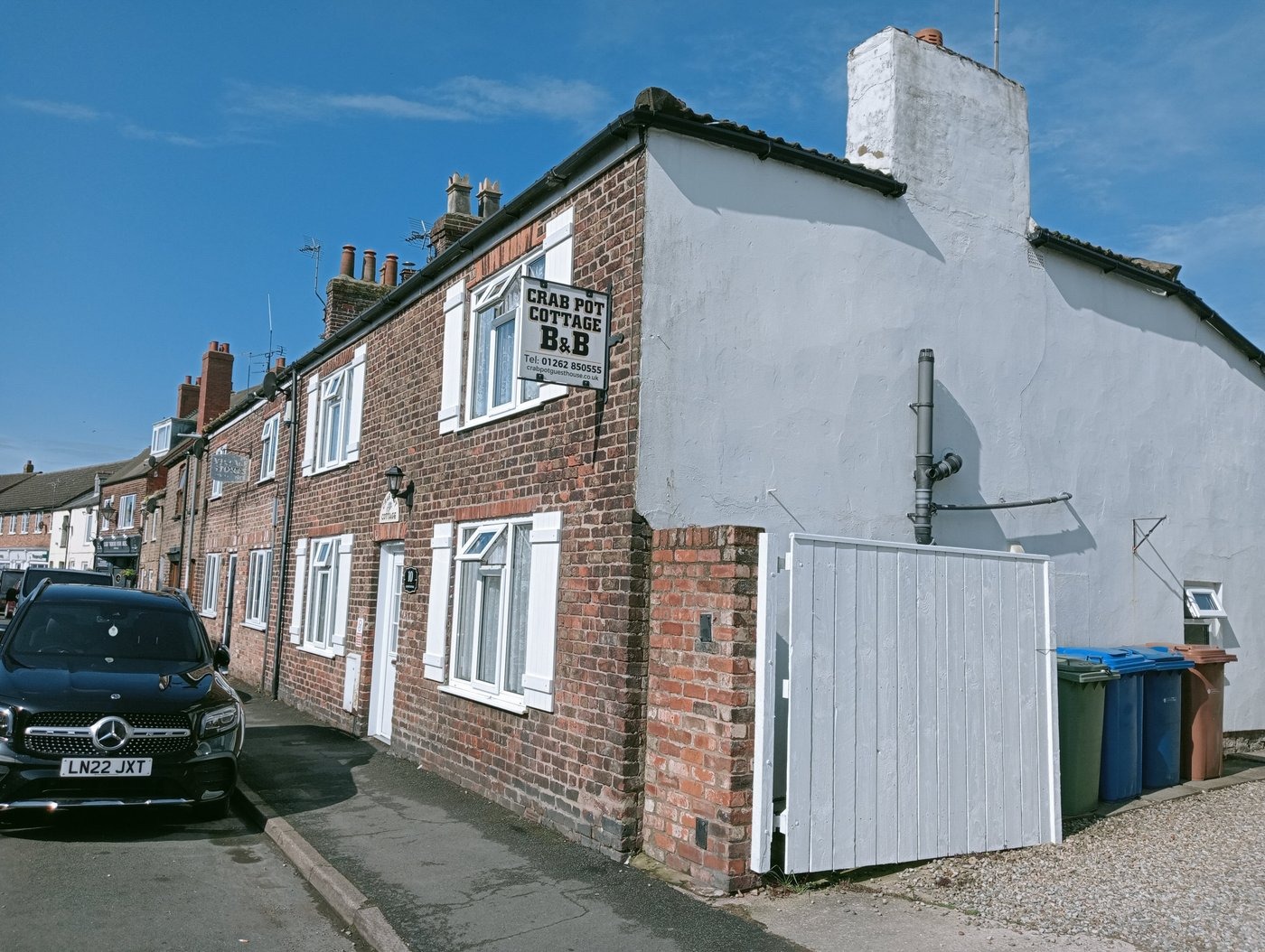


Flamborough Head isn’t just one of the most dramatic stretches of coastline in Britain — it’s one of the most wildlife-rich. From half a million seabirds nesting on the chalk cliffs to grey seals hauled out on the rocks below, and dolphins arcing through the North Sea on calm days, the wildlife here is genuinely world-class. Staying at the Crab Pot Guest House puts you right in the heart of it. Here’s your guide to the incredible wildlife you can expect to encounter on the Flamborough coast.
1. Puffins — Yorkshire’s Most Iconic Seabird
Best time to see them: Late April to early August | Best spots: North Landing, Flamborough Cliffs, RSPB Bempton Cliffs
Few wildlife encounters in Britain match the thrill of seeing your first puffin. With their vivid orange feet, rainbow-striped beaks and comical waddling gait, these extraordinary little birds arrive at Flamborough each spring to nest in the crevices of the chalk cliffs — and the headland is home to the largest mainland puffin colony in the UK.
The best place to see them close up is along the clifftop path between North Landing and the lighthouse, where puffins nest right at the cliff edge and can often be seen just metres away. May and June are peak season, when both adults are busy ferrying sand eels back to hungry chicks. By early August most have returned to sea, so don’t leave it too late.
Every year the Yorkshire Wildlife Trust hosts the annual Yorkshire Puffin Festival, usually on the first weekend of June, at Flamborough Cliffs — a brilliant day out for families and wildlife enthusiasts alike.
💡 Top tip: Bring binoculars or a camera with a good zoom — puffins are small and fast! The clifftop path at North Landing gives some of the best close-up views without needing to visit a visitor centre.
🐦 Yorkshire Wildlife Trust — Flamborough Cliffs |
🐦 RSPB Bempton Cliffs

2. Gannets, Guillemots & the Seabird City
Best time to see them: March to October | Best spots: RSPB Bempton Cliffs, Flamborough Head viewpoints
Puffins may grab the headlines, but the sheer spectacle of Flamborough’s seabird colonies goes far beyond any single species. Around half a million birds nest along the cliffs between Filey and Flamborough Head each summer, making this one of the most important seabird colonies in Europe.
Gannets are among the most breathtaking to watch — brilliant white with golden heads, they plunge-dive into the sea at extraordinary speed, hitting the water like arrows from 30 metres up. Guillemots and razorbills pack the cliff ledges in their thousands, jostling for space in one of nature’s great urban scenes. Kittiwakes call constantly from their precarious nests, fulmars glide effortlessly on stiff wings, and shags dry their wings on the rocks below.
The RSPB has six cliff-edge viewing platforms at Bempton, with knowledgeable volunteers on hand throughout the season to help with identification. The noise and smell alone are an experience you won’t forget.
💡 Top tip: Go on a calm, clear day to see gannets plunge-diving at their best. Arrive early in the morning before the crowds arrive — the light is better for photography too.
🐦 RSPB Bempton Cliffs |
🐦 Yorkshire Wildlife Trust

3. Grey Seals
Best time to see them: Year round — pups in autumn and winter | Best spots: North Landing, Selwicks Bay, rocks below the lighthouse
Grey seals are a constant and joyful presence along the Flamborough coast. They can be spotted throughout the year, bobbing inquisitively in the water just offshore or hauled out on the rocks in the sheltered coves below the cliffs. They have a habit of popping their heads up to watch walkers on the clifftop path with what seems like equal curiosity.
North Landing is one of the best spots to see them, particularly in the calmer months when they gather in greater numbers. Autumn and winter bring pup season, when grey seals come ashore to give birth — a truly special sight if you’re lucky enough to time your visit right.
Always keep a respectful distance and never approach seals on the beach. If you see a lone pup on the shore, leave it well alone — the mother is almost certainly nearby.
💡 Top tip: Walk to the rocks just south of the lighthouse on a calm day and scan the water carefully. Seals are often spotted here in good numbers, particularly in the early morning.

4. Dolphins, Porpoises & Whales
Best time to see them: Spring to autumn | Best spots: Flamborough Head viewpoints, sea watching hide, boat trips from Bridlington
The waters around Flamborough Head are exceptionally rich in marine life, thanks to a phenomenon known as the Flamborough Front — the meeting point of cold and warm ocean currents that creates a powerful upwelling of nutrients. This natural larder attracts everything from sand eels to mackerel, and in turn draws dolphins, porpoises and occasionally whales.
Bottlenose dolphins and harbour porpoises are regularly spotted from the clifftops on calm days, their fins cutting through the water or their bodies arcing in a bow wave. Minke whales are recorded around the headland every year, and on exceptional days even humpback whales have been spotted. The sea watching hide just south of the Fog Signal Station is the best land-based vantage point, with panoramic views across the North Sea.
For the best chance of cetacean sightings, join a wildlife cruise from Bridlington aboard the Yorkshire Belle — the boat trips run throughout summer and give spectacular views of the cliffs from the sea as well.
💡 Top tip: Flat calm days with low wind are best for spotting marine mammals from the clifftops. Scan the water slowly and look for fins, splashes or blows on the horizon.

5. Clifftop Wildflowers & Butterflies
Best time to see them: May to August | Best spots: Cliff grassland along all headland paths
The chalk grassland along the top of the Flamborough cliffs is a spectacular habitat in its own right. In late spring and summer the clifftops are carpeted with wildflowers — sea pinks, kidney vetch, bird’s-foot trefoil, red campion and wild thyme tumble together along the path edges, turning the clifftops into a ribbon of colour between the white chalk and the blue sea.
These flower-rich grasslands attract a wonderful variety of butterflies and moths. Look out for wall browns, painted ladies and small tortoiseshells feeding on the clifftop flowers, along with the stunning six-spot burnet moth and even the extraordinary hummingbird hawk-moth, which hovers like a tiny hummingbird as it feeds.
💡 Top tip: The section of clifftop path between the lighthouse and North Landing is particularly good for wildflowers and butterflies in June and July. Walk slowly and look down as well as out to sea.

6. Rock Pooling & Shoreline Wildlife
Best time to visit: Low tide, year round | Best spots: North Landing, South Landing, Danes Dyke beach
When the tide goes out along the Flamborough coast, a whole hidden world reveals itself. The rock pools here are among the best on the Yorkshire coast — teeming with hermit crabs, shore crabs, beadlet anemones, blennies, starfish and an extraordinary variety of seaweeds and marine algae.
North Landing is a particularly good spot, with extensive rock ledges exposed at low tide. South Landing and Danes Dyke beach are also excellent, with the added bonus of the chalk pebble beach at Dykes End being a great place for fossil hunting — Yorkshire’s chalk geology means that fossil sea urchins, belemnites and bivalves can sometimes be found amongst the pebbles.
The Living Seas Centre at South Landing, run by the Yorkshire Wildlife Trust, is a brilliant resource for families — with touch tanks, marine displays and guided Seashore Safaris that bring the rock pools to life with expert commentary.
💡 Top tip: Always check the tide times before heading down to the rock pools — some coves become cut off at high tide. The best rock pooling is in the hour either side of low water.
🐟 Living Seas Centre — South Landing

7. Autumn & Winter Wildlife
Best time: September to February | Best spots: Sea watching hide, Danes Dyke woodland, clifftop paths
Flamborough is not just a summer destination for wildlife. In autumn, the headland becomes one of the best birdwatching sites in Britain as vast numbers of migrating birds make landfall after crossing the North Sea. Rarities turn up regularly, and the woodland at Danes Dyke acts as a magnet for exhausted migrants seeking shelter — redstarts, pied flycatchers, wrynecks and firecrests are among the exciting species regularly recorded.
Out at sea, late summer and autumn bring passing skuas, shearwaters and terns moving south along the coast. Winter sees divers, grebes and sea ducks appearing offshore, and grey seals are at their most visible, hauling out in good numbers. The cliffs take on a raw, magnificent grandeur in the low winter light, and with far fewer visitors on the paths, it can feel like you have the whole headland to yourself.
💡 Top tip: The sea watching hide near the Fog Signal Station is an excellent spot for autumn seabird passage. Visit on a north-easterly wind in September or October for the best chance of seeing skuas and shearwaters moving through.

Wildlife by Season — Quick Guide
- Spring (March–May): Seabirds return to the cliffs. Puffins arrive from late April. Wildflowers begin on the clifftops. Seals visible year round.
- Summer (June–August): Peak puffin season. Half a million seabirds in full swing. Dolphins and porpoises offshore. Butterflies and wildflowers at their best. Rock pooling and Seashore Safaris at South Landing.
- Autumn (September–November): Migrating birds make landfall. Skuas and shearwaters offshore. Grey seal pups. Spectacular storm-lit cliffs.
- Winter (December–February): Divers and sea ducks offshore. Seals hauled out in numbers. Quiet, dramatic clifftop walks. Woodland birds at Danes Dyke.
Essential Wildlife Watching Tips
- Binoculars: Essential for seabirds, marine mammals and migrants. Borrow or hire a pair from the RSPB visitor centre at Bempton if you don’t have your own.
- Respect wildlife: Always keep a safe distance from nesting birds and resting seals. Never approach a seal pup on the beach. Stay well back from cliff edges.
- Check the tides: For rock pooling and beach access, always check tide times before heading down. Some coves can be cut off at high tide.
- Weather: Flat calm days are best for spotting marine mammals. Seabird watching is excellent in almost any conditions — the birds are often more active in a breeze.
- Useful resources: Yorkshire Wildlife Trust, RSPB Bempton Cliffs and Living Seas Centre all have up-to-date visitor information.
The Crab Pot Guest House is perfectly placed to make the most of Flamborough’s incredible wildlife. Book your stay with us and wake up on one of the finest wildlife coastlines in Britain.